Got a note from a reader on our Kit Up! tip linesuggesting we discuss the benefits of the Garmin Foretrex wrist-mounted GPS.
I will say that I saw these things on the wrists of several small unit commanders and NCOs over in Afghanistan and I can surely understand their utility. As our reader says:
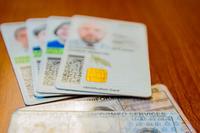
Got turned on to the [Foretrex] GPS last year (by a couple JTACs) before I deployed to Iraq…took the wrist clip connector off of it and put it in a standard MIL ID card holder…fits perfect… wear it on my arm… and the GPS is easy to use and takes up little to no space.
Our JTAC in Paktika, ‘Square,’ wore one and I’ve seen other platoon and company-level leaders wearing them as well. I’ve never actually used one myself, so I have no first hand knowledge of their ins and outs, but I will say the system makes sense to me. Other, more sophisticated models have internal maps and other whistles and bells. But seems to me the Foretrex has the KISS method down pat. All you need at latlong or six-digit grid, altitude and bearing. And that’s what the Foretrex gives you.
Our reader also suggests these units, which retail for about $200, should be “standard issue” and we at Kit Up! agree…at least for small unit officers and NCOs. Something this simple, functional and low profile that could prove the difference between life and death when it means a Medevac, fire mission or CAS shouldn’t be an out-of-pocket expense.


{ 37 comments… read them below or add one }
People learning to rely on hi-tech gadgets. What happens when the GPS fails, either because of an EMP, or because some nation decided to shoot the GPS birds down, or the thing just quits, or the batteries die? Better to learn to rely on a simple lensatic compass and good map reading skills. I do recall that back in the day, when I was in the green machine (pre-GPS), many officers were challanged to understand and read a road map, let alone able to accurately navigate using at topo map and compass. mid-and upper level NCOs tended to do better in the land navigation department.
What if your M16 fails? Use a knife. What if your knife fails? Use your legs. What if your legs fail? Use your hands.
I say use it.
NOW WE'RE JUST PLAIN GETTIN LAZY JUST USE A COMPASS; ALSO MRES LETS FINISH OFF ALL DEM C-RATS BRING BACK THE JOHN WAYNES & CHURCH KEY ALL THE COMFORTS OF HOME. REMEMBER WE'RE HERE TO FIGHT NOT PARTY HI-TECH'S GOOD BUT LETS GET REAL.. MR. BOO
I agree with you but we are also a high-tech military force with lots of smart people. I am now going on 25 years in the Army and I can tell you that I wished I had these gadgets back in the 80s! As we all know with experience that gadgets do fail and with lessons learned I ALWAYS bring extra batteries and even a second gps, alongside my lensatic compass and Suunto multifunction wristwatch. I always make sure to bring backup of almost everything we use. In a platoon with approximately 40 to 50 personnel, almost all carry a personal gps and compass so I think if a few gps units do fail there will always be others. On another note, if the enemy does manage to shoot down all 24+ gps satellites and drop an EMP, I think we are all done for! CHEERS!
Yeah, map and compass work great, until you are pinned down with multiple casualties, you have approximately 45 minutes to get your Soldier back to the Level 3 treatment facility before he dies, and you need to also coordinate for close combat attack in order to destroy the threat. I would much rather have the grid ready to be read rather than try to determine a vicinity 6-digit based upon a map. I guess the old school Army would have had to experience real combat before making dumb comments.
Why wouldn't you want to use something that will only help you and get you the answer faster….Smarter not harder…I guess that isn't old school army though…
I have one of these that I use for various outdoor adventures. I would say the one shortcoming is its antenna. It has a hard time maintaining signals in denser areas. You just have to be aware of that. I guess if you are in the desert, with a clear view of the sky, its a non-issue.
I have to agree with Bob. Back in "The Day",I received God-only-knows-how-many hours of training on the reading of maps, use of a lensatic compass (still have one!), shooting back-azimuths, and all the other tradecraft that goes with being a 19D10 (Scouts Out!). GPS is all good & fine, and is useful as all getout, but what happens when it isn't available? And you have a serious casualty or three? Somebody's gonna die. LEARN the basics…and re-learn them…and Re-learn them. Only way it's gonna work. Nice new toy, though…
NEWSFLASH: THE ARMY IS STILL TEACHING THE USE OF A MAP AND COMPASS!!!!!! SHEESH!!
As a 16+ year veteran of the Army and having recently transitioned from enlisted to officer (i.e. spent most of the last year in field leadership training with a bunch of guys who were brand spanking new to the military), I can assure you that the GPS has not REPLACED the old fashioned stuff – just supplemented it.
Quit yapping about "back in the day." I've been "back in the day" AND here in today. GPS is a valuable resource. If you don't know how to read a map and compass, it doesn't help you anyway. If you can't navigate, you can't navigate. Period.
Bob and M.G you are both right. But sometimes it is just easier to access a GPS in rough spots instead of looking at a map. But mastery of maps and compasses should still be stressed.
You have to be proficient in the basics of map reading, compass usage etc especially as a Infantryman on the ground. The GPS is a nice tool to use if your in a pinch for time. I remember having to occupy a BP with my squad once. We rolled into the area mounted in 113's and needed to occupy our position quickly. The GPS was able to spit out accurate grids for our TRP's without any problem. Needless to say, we had just enough time to hide our track and plot the grids for accuracy before a Bradley Platoon came rolling down the lane. Granted it was a training exercise but the benefits of using the GPS then double checking with the map helped us immensely since we were occupying a CSOP. My point is, don't forget the basics and discipline yourself to keep sharp on technology as well as knowing how to plot grids and use your protractor / compass as well.
I looked at one last year in Chicago at the only retail Garmin Store in the US. (At least it was at the time).
Works great, runs on AA batteries, and seems sturdy – though I didn’t field test it, I threw it against walls and the ground dozens of times to the dismay of Garmin staff. The display worked accurately, despite my indoor abuse.
Great tool. Excellent features if you are a paratrooper (HIHO, HALO, static… plots freaggin everything), or if you like the feature of having a GPS strapped to your wrist.
Only downside – I couldn’t afford it at the time. Now its more affordable…
I think it would be good to use it as long as you do not forget how to read a map. If the GPS were to fail you and your platoon would be screwed.
I guarantee that I can plot a direction for movement faster with a GPS than you can with a compass. Every single time. To say don't use it because it might fail, what happens if you compass fails or you can't find the map. I agree that you should learn and practice the old way, but in the field you should use anything you can to make it faster, and more accurate leaving the hard to do way you trained for as a backup.
I'm really tired of old farts on here complaining about how it was done in their day. The Army still teaches loads of Land Navigation with a compass in all Officer commissioning sources.
I hope you don't rely on ANY Army Medical Department types to lead you using a map & compass!!!
i agree if helps the military supply to platoon leaders in the infantry
They forget the multi-cam thing gismo like what the french and russian special OPS was using.
Jimbo, I didn't get to be an "Old Fart" by being a fool…and I know a lot of "Young wise Men" who are deader that a mackeral. New tools are fine, just don't forget the basics. Nuff said.
I have a hand held gps that I carry on trips and fishing and found they are very useful.It takes a lottle time to learn how to use it but is worth it's weight.
I understand the argument of soldiers getting lazy by relying on these devices but let me put a scenario out there.
Let’s say you are on a mountain side in Afghanistan and taking fire from three sides at very close range. You are trying to call in close air support and calling in danger close mission just so your guys can survive being outnumbered and in the middle of nowhere. What would you rather use to give you position…. a 1:50,000 map that may not be accurate (just so you know land moves and most maps have not been updated in 10 to as much as 30 years). or would you rather want to use a GPS device. Take into mind that time is essential along with accuracy. I know I want the GPS device.
Use the best that is available, but understand how to use everything that is available.
Agreed!
I am in a light unit and we do tons of land nav training. GPS devices are used because they are way more accurate then a guy with a map and compass. All PL’s and NCO’s must have a compass/map in there kit in case there GPS fails. I would think that worring about some rogue country shooting down GPS sattelites is a waste of time. Having plenty of batteries in my pack would the be the priority. If you are doing a danger close mission and you do not have an accurate grid, good luck getting fires. Deriving your location off of map much less a grid for the enemy could potentially be 100 to 300 meters off. That kind of error can get soldiers killed in a danger close mission. Accurate maps are a big problem in some countries I have been to. Call me a lazy all you want to, I will keep using my GPS.
Problem with the Garmin is that it will not use the military codes that are designed to work when the commercial codes are jammed or spoofed. Still, not a bad idea. I flew small planes and used chart and compass as my main nav at 130KTs, but when GPS's came in I used one as BACKUP. On instrument flights I used the primary set of nav aids, but still used teh GPS as a backup. More info and redundancy can save your &^^ wether your in combat or just flying over Maryland.
Christ! Enough with Back In The day! JESUS! The world ain't gonna sit still just so you old farts can tell your old war stories.
The WHOLE REASON the Afghanistan is still n the 5th century is because the leadership refuses to advance out of "Back In The Day!
I've been in 29 years so I started "Back In The Day" and think stuff like GPS makes our jobs easier, more effective/accurate, and SAVES LIVES (medevac and fire support, etc).
Get a life!
Learn the old and learn the new. When it works, the new is speed and life. When it doesn't, the old saves. I'd rather have the knowledge of 3 systems than only 2, or just one. After all- what if your map tears? Your compass breaks? You make an error of a few degrees and send the Medivac into enemy territory away from your position? You are separated from your unit and injuried, the only one to save you is someone that doesn't know how to get a compass reading but can read numbers off your wrist?
Never said anything about abandoning new technology…witness me using Windows 7. But new technology sometimes fails, so the basics need to be emphasized. And, usually, I could get my location in within 10-20 meters.
But, I will agree, when a Medivac needs to be there NOW,( or you got a 2nd LT calling in a fire mission,) GPS can make the difference between Life and Death.
I'm currently in Army ROTC. Literally 80% of what we do is map reading and land nav. At this point the compass is like an extension of my hand…
If your unit doesn't reinforce that technology is only a supplement and not a replacement, then you have bigger issues. I personally own a ForeTrex (I believe it's a 201) and used it during my deployment to Baghdad on a regular basis. In fact, it was one of the best investments I made during that deployment. Reliable. Quick. Easy to use.
I have agree with CSARMedic…quit the "back in the day" crap. I am am "old fart" too with 24 years in the Army (when the only GPS I ever saw fit in a truck). I am a former NCO with the "Big Red One" as well now a Cavalry Officer former 19D10 and 19K10 instructor. I maxed both the 82nd Airborne's day and night Land Nav courses with a $10 Silva compass. I could spend 30 klicks buttoned up in a track, pop out, call for fire and put steel on target first shot. I did not get lost….UNTIL NTC (Desert). Scared the living crap out of me my first time in the desert and I got "disoriented" (AKA lost). Navigating woods and jungle EASY….desert, I will take a GPS all day long. Oh BTW…reason my Bradley Team was Top Gun 2 years running is we trained AUX sights (old school) too…so yeah know the basics but I will always use whatever works best to keep my men alive….PERIOD!!!
I wore one as a troop commander and it was amazing how easily it was to give quick, accurate grids. That being said, I also had my trust compass and map as I trust batteries like I trust women.
I only wear one while hiking but this: "took the wrist clip connector off of it and put it in a standard MIL ID card holder" is needed. Some companies now make wrist holders specifically for thre Foretrex. The newer ones apparently have a better strap but the older models (like mine) have the worst strap ever. Held in by two tiny weak pins that pop off as you swing yourself over a log.
Also, for the "oh god what about maps!" guys, well, this thing really doesn't work very well if you don't have a map to go with it.
Using gps is lazy? Thats like saying using a humvee is lazy… Lol… Or dont use acog or cco… Why wouldnt u use technology if u have… Sure u train how to do it the old fashion eay whether it be ruckin, map and compass, or iron sights but technology is what gives us an edge… Ah ignorance
All these comments should be noted by Garmin or whoever to enlighten them to design a GPS with a removable mechanical compass.
This is 2011, you use the tools as a force multiplier. Army fromt BCT to ROTC/ BOLC you will use a compass, protractor and map. However GPS is more and more widespread and these wrist units are great tools to use especially when elements are separated and for many other things. Anything that gives me a one up on the enemy is a good tool. That said if you cannot do the basics do not jump to these and land nav is a perishable skill.
I agree with most of these comments however, in the midst of constant training on land navigation during IOBC using the old methods it was encouraged for us to utilize something like this at our units. In fact, this specifically. Knowing your grid is important, knowing it really quickly is doubly important and realistically if you’re in a firefight, pulling out a map to call medevac or fire support if you’re not positive where you are in the midst of the chaos is wasted time. Use technology and if it breaks, then you put those other talents to use. Thats why we plan, have backup plans, and supplements to backup plans.