Sailing the Sandy Seas
November 5, 2008|
Submitted by Eric Daniel
For those of you who were ever on the M60 series of tank, one of the nifty features it had was a built in compass. While this might not seem like a big deal, it did offer you the ability to navigate on the fly (with a conventional compass you’d have to stop the tank, dismount, get away from all the metal, and shoot an azimuth, not exactly the most streamlined of processes.)
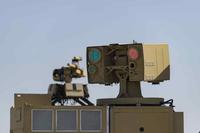
This feature, regrettably, was omitted from the M1 series, as well as not appearing on humvees (funny thing that, not giving scouts a built-in compass.) Our solution to this dilemma was to install a “boat” style compass behind the GPS doghouse (right next to the weather station.) The compass wasn’t fancy, it only ran us about $25, but it was illuminated, fluid stabilized, and weatherproof.
The neat thing about boat compasses is they can be tuned. Watercraft generate their own magnetic fields, which needs to be compensated for, not to mention the variations in the local magnetic field, and so by using one of these compasses we were able to zero out the magnetic influence of the tank, as well as compensate for the local variations. The large viewing area of compass made it easy to read through the FUP (Forward Unity Periscope) and the fluid dampening prevented the compass ball from flailing about uncontrollably as we went cross country.
That was 15+ years ago. I know there are all sorts of high speed navigation systems out there both military (Blue Force Tracker et. al.) and civilian (I own a GPS now) but I still like to carry a compass as a backup (the Earth has never let me down.) Boat compasses, also have evolved greatly. The top end ones now include GPS as well as other navigational features, but the base line model still does the trick for me. The Ritchie D-55 Explorer, for example, is fluid stabilized, internally illuminated (the night light is low visibility green) and can be configured for either 12 or 24 volt operation (you can wire it into your dome light controls.) It’s got internal dampers and field compensation controls for stability and accuracy, and a detachable base so you can remove it for storage (since the base is flat you can Velcro the unit to the top of the turret, the dash, where ever.)



Actually, the biggest need for "tuning" a compass -- marine or otherwise -- is because magnetic field lines deviate from true north in patterns that vary with your location.
Sure, metal-hulled watercraft do provide some jiggy deviations, but if you are operating constantly in the same general area, you'll want to adjust for local deviation rather than trying to add or subtract it all the time.
Accurate
Posted by: Lewis Perdue | November 05, 2008 at 03:23 PM
Lewis,
I don't know squat about watercraft, but I do know lots about tanks, and let me tell you, a 68-ton tank has a lot of metal in it, and that metal has a definate influence on the compass. Being able to tune the boat compass was the only thing that made it functional.
Posted by: Eric Daniel | November 06, 2008 at 07:35 AM
Oh yeah! M-1 BETTER have lots of metal (steel being the operative material in magnetic concerns)...
Thing to remember is that the magnetic deviation on a tank is gonna depend not only on the metal, but also the electronics ... electricity = magnetic field.
Depending on the radio-frequency field strength, you might find the compass doing wonky things.
In addition, the steel density field won't be the same in two different places, so neither will be the compass deviation. Need to adjust with a change in location.
Adjusting is best done with a portable pelorus to site in on landmarks with known positions (like off a topo map).
Posted by: Lewis Perdue | November 06, 2008 at 10:16 AM
"Location" in that last post being where you mount it on the tank as opposed to my previous post which would have referred to where the tank itself was located.
Posted by: Lewis Perdue | November 06, 2008 at 10:18 AM
Lewis,
What we ended up doing was "calibrating" our compass with the gun over the front (turret facing forward) with all electrical systems operational - Thermal unit on, turret power on, gunner's primary sight on. We didn't try and do it with the radio energized (i.e. transmitting) but since radio SOP calls for short (<10 second) transmissions, we decided this was acceptable (we weren't planning on navigating across all of Iraq with our radio transmitting.)
More over, we created a 'calibration" course by setting up a series of N-S and E-W points over a 5km "course" which we validated with our artillery FISTV.
Posted by: Eric Daniel | November 06, 2008 at 10:24 AM
Way cool. You guys really thought your way through that one.
I'm a gadget freak with two operating environments: marine and mountain. Wind or self-propelled. Small and unconventional arms only.
Shoot me questions if you think I might be of help.
Posted by: Lewis Perdue | November 07, 2008 at 06:32 PM